
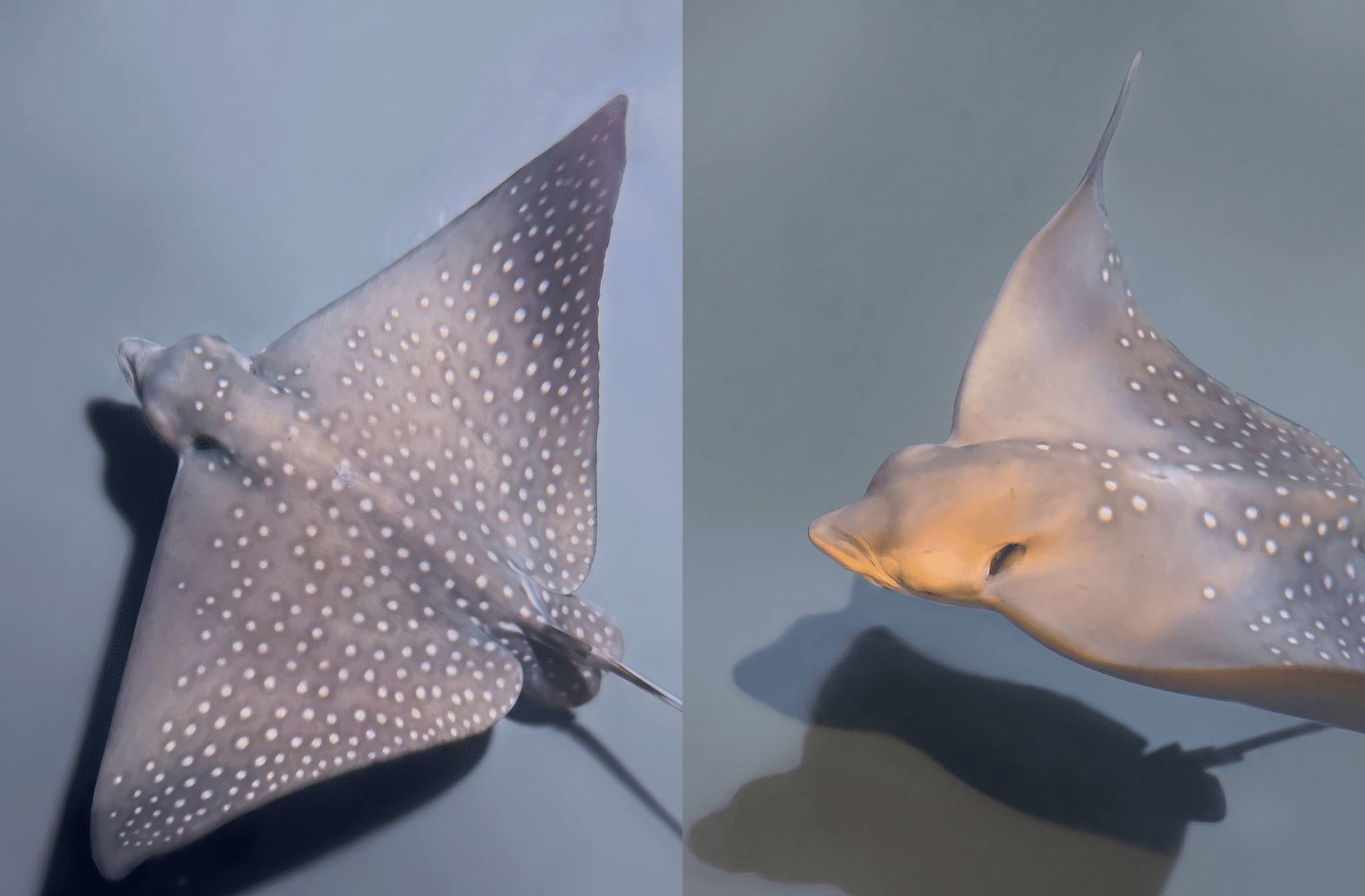
Two young spotted eagle rays, one female and one male, were born on the night of June 29, 2026, at 12:32 AM and 12:35 AM.
A birth in the main tank
Giving birth in a 1.5 million-liter tank shared with other ocean giants (including the famous scalloped hammerhead shark) is a real challenge. To anticipate the birth and ensure the safety of both the mother and the newborns, the aquarium teams had installed a customized protective net a few days in advance.
In spotted eagle rays :
Gestation lasts approximately 12 months.
An independent birth: The species is ovoviviparous (eggs hatch inside the mother’s womb). The babies are born fully formed and capable of swimming from the very first second!
No parental care exists among these rays. Right from birth, the mother goes her own way, and the young must learn to fend for themselves.
The first weeks under close watch
Our two small rays have been transferred to a quarantine tank behind the scenes. There, they are currently being closely monitored by our aquarist technicians.
This allows our team to:
- Monitor their growth and overall health.
- Observe their behavior in a calm environment.
- Establish a specific feeding protocol using target training.
Target training is a gentle method that involves teaching the young rays to come and feed at a specific location. This learning process is fundamental: it will facilitate their veterinary care throughout their lives and significantly reduce their stress during future medical handling.
Focus on a majestic… but vulnerable species
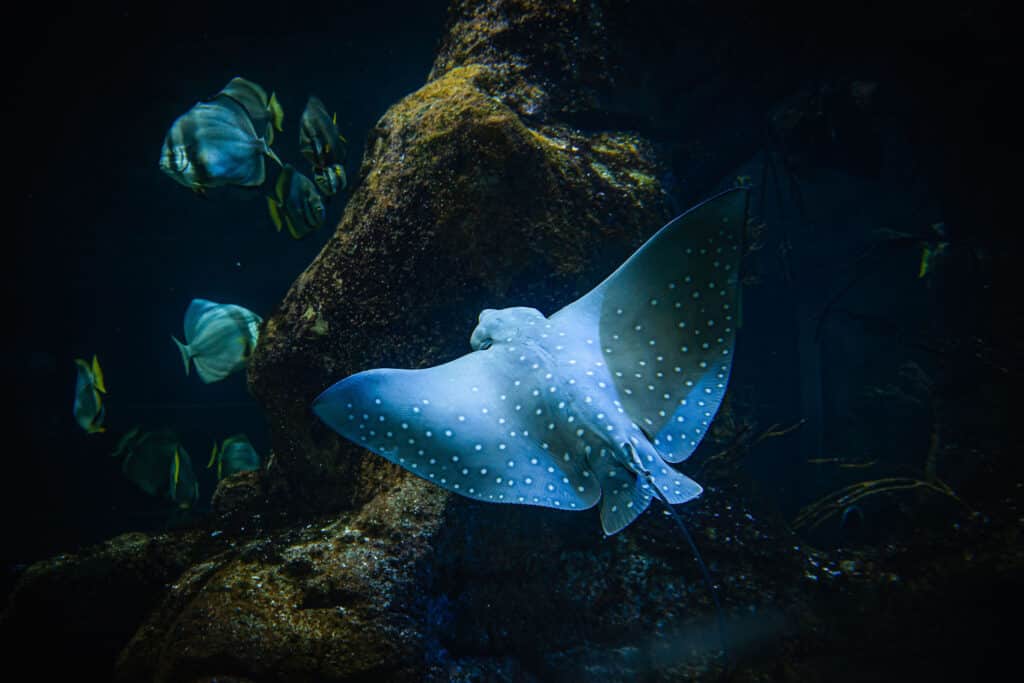
With its large triangular fins that give it the appearance of an underwater glider, its streamlined body, and its flat shovel-shaped snout, the spotted eagle ray never goes unnoticed. It moves by gracefully undulating its pectoral fins—as if flying through the water—in search of crustaceans and mollusks that it flushes out of the sand in tropical lagoons and reefs.
Did you know? The spotted eagle ray is unfortunately threatened in the wild by overfishing, the degradation of its natural habitat, and bycatch. Today, it is classified as an endangered species on the IUCN (International Union for Conservation of Nature) Red List.
Soon visible to our visitors!
If all goes well and their development continues optimally over the coming weeks, the two little ones will soon make their debut in the tropical tanks.
We look forward to introducing them to you and letting you admire the natural grace of these two new residents. Stay connected on our social networks to follow their progress and find out the date of their official arrival on the visitor tour!